
Weekend Reading #98


Weekend Reading: A weekly roundup of interesting Software Architecture and Programming articles from tech companies. Find fresh ideas and insights every weekend.
This week: bool.dev maps AI terminology onto the agent execution loop; Uber explains how it governs thousands of MCP tools; Zalando separates delegated agent access from provider credentials; and Meta explores the physical engineering behind a planned petabit-class transatlantic cable.
30 AI Terms to Know: MCP, Skills, Agents, Workflows and More
👉 For developers and tech leads making sense of agent tooling
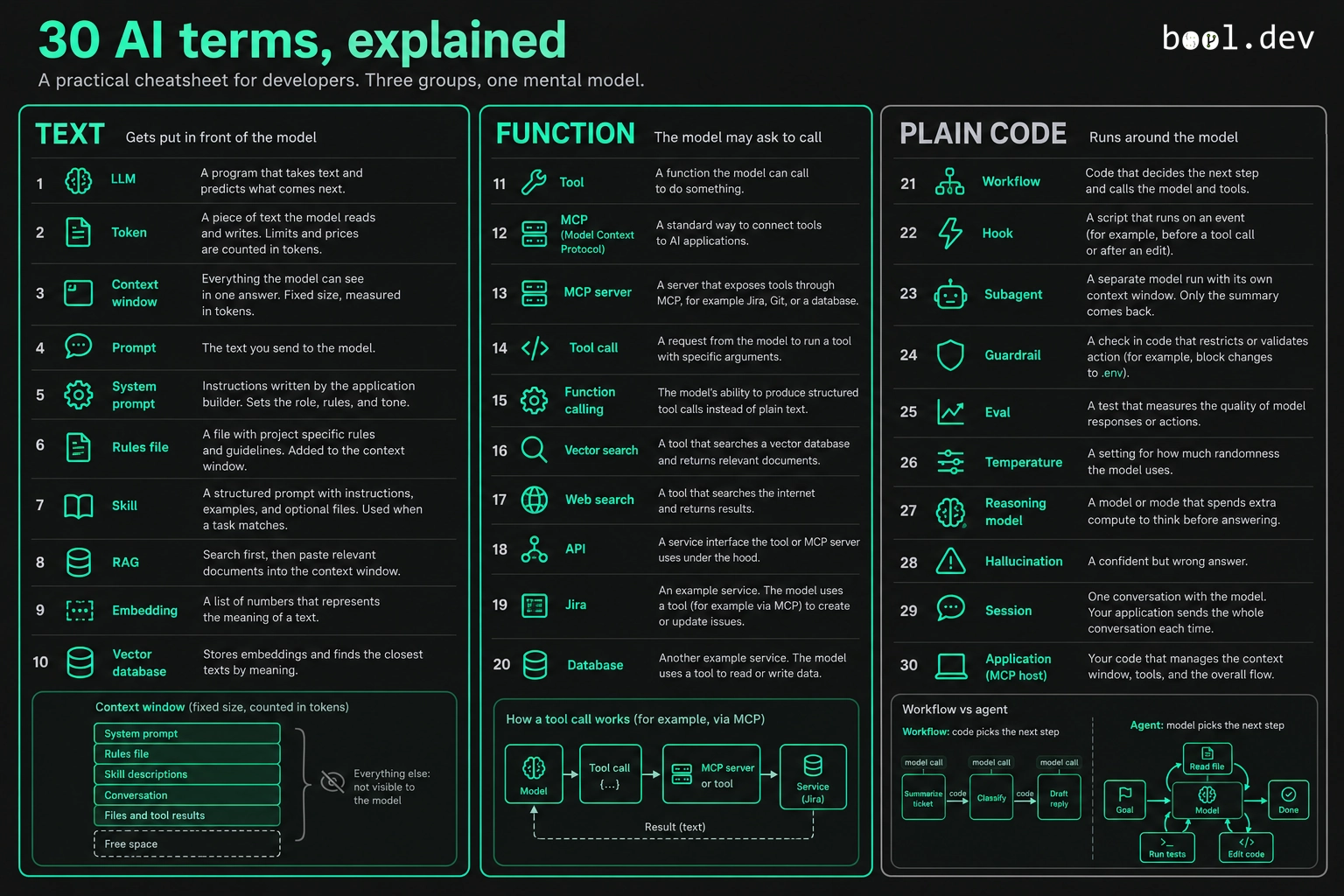
Rather than presenting an alphabetical glossary, this article organizes 30 terms around what actually happens during an agent run: text enters the context window, the model requests an action, application code executes it, and the result returns as context. That framing separates frequently confused concepts: MCP supplies connectivity, skills supply task-specific instructions, hooks execute outside the model, and subagents work with separate context.
The useful architectural question is not "Which agent feature should we add?" but "Where does this responsibility belong?" Instructions can guide behavior, but enforced restrictions need application code. Likewise, an agent loop helps when the next step genuinely requires judgment; a predefined workflow is easier to inspect when the sequence is already known. The diagrams make those boundaries easier to discuss before implementation.
Designing MCP Gateway: Uber's MCP Management Platform
👉 For platform engineers exposing existing services to AI agents
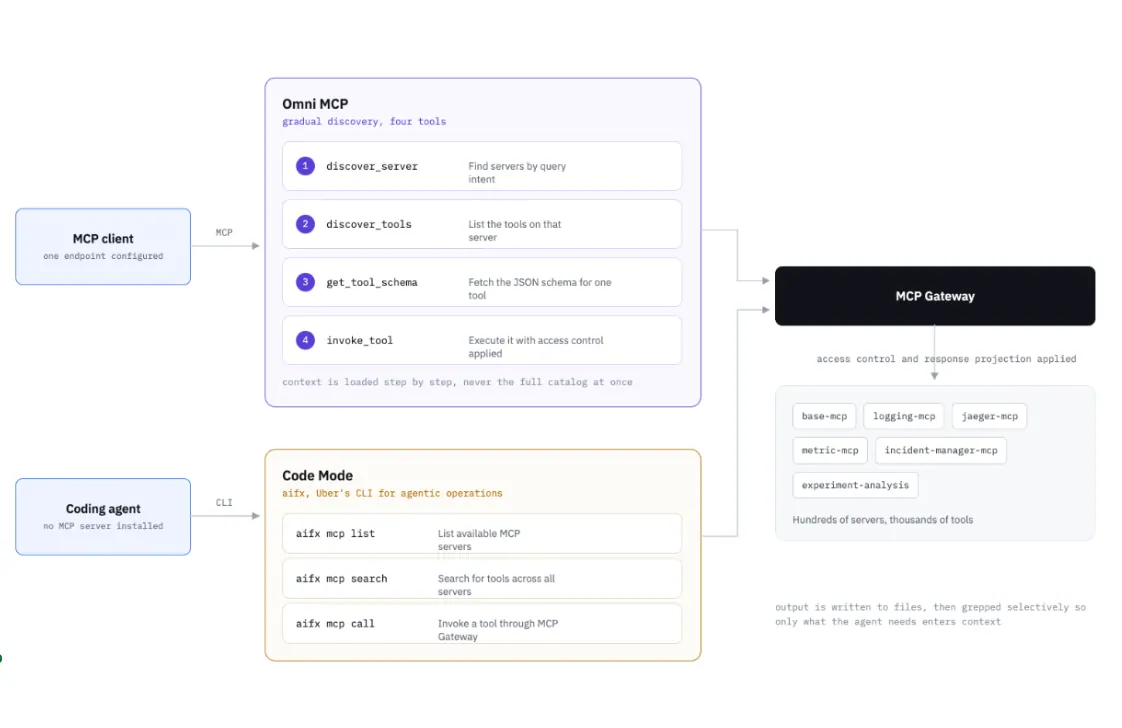
Uber's MCP Gateway separates a registry control plane from runtime request execution. A crawler discovers existing APIs and native MCP servers, while the gateway translates calls into HTTP, gRPC, or TChannel. The platform hosts over 800 servers and 5,000 tools, with tool-level authorization and response redaction. Crucially, discovered tools start disabled, and owners must approve enablement and description changes.
That separation is the transferable lesson: discovery should not automatically create authority. Tool descriptions influence model decisions, so reviewing them as versioned configuration matters alongside reviewing schemas. Uber also uses incremental discovery and response projection to avoid filling model context with every available capability. Smaller platforms can adopt those boundaries without reproducing Uber's entire crawler or service-mesh infrastructure.
Agentic Platform: Open-Sourcing the Agentic Identity Broker
👉 For security and platform engineers designing delegated agent access
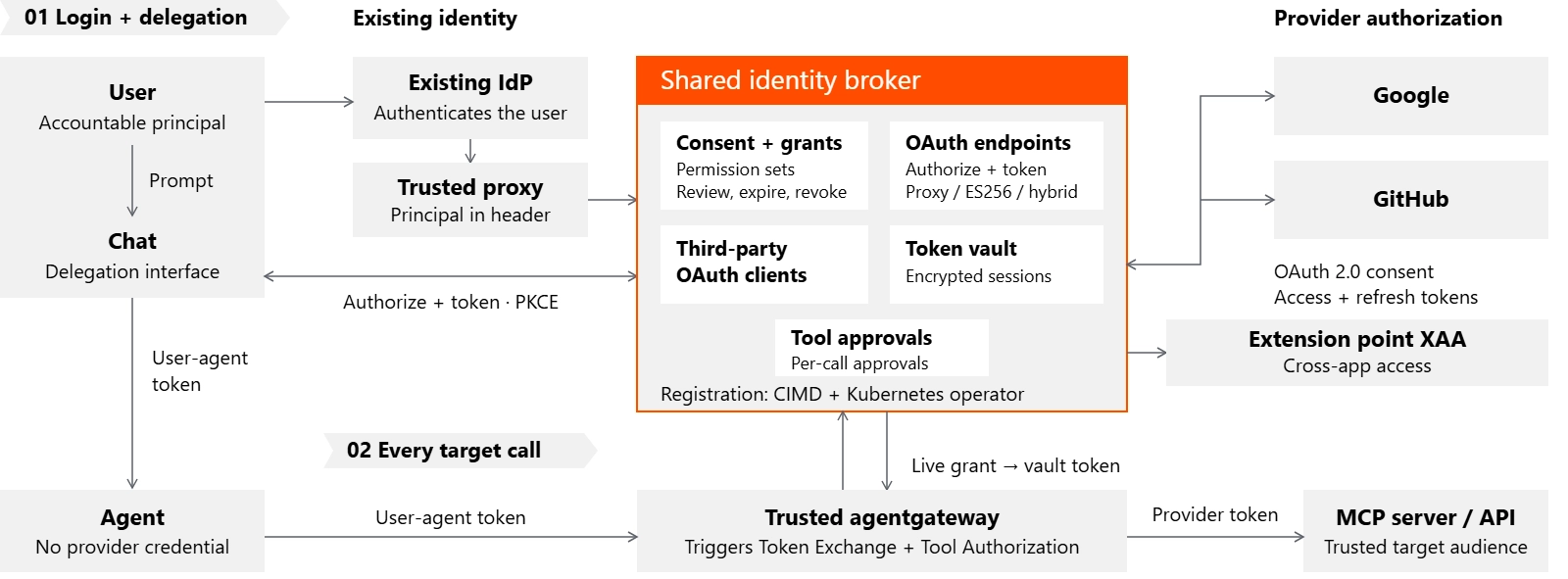
Zalando's broker records user-to-agent delegation, stores encrypted provider sessions, and exchanges credentials through a trusted gateway. Effective access is bounded by both the user's permissions and the agent's allowed capabilities. Agents receive a delegated token, not the underlying GitHub or other provider credential; grants can be time-limited and revoked.
The distinction between credential custody and authorization is particularly useful. Keeping provider tokens away from agents reduces exposure, but does not make every permitted tool call appropriate. Zalando therefore combines token exchange with gateway policy checks; centralized tool approvals remain ongoing work. Revocation also has a boundary: it blocks future exchanges, not provider tokens already issued. Treat token lifetime and per-call policy as separate design decisions rather than assuming one consent screen solves both.
Inside Petal: Building the World's First Petabit-Class Transoceanic Subsea Cable
👉 For infrastructure architects interested in capacity and physical constraints

Petal is designed to deliver 1 Pbit/s across approximately 7,000 kilometers between France and the United States, with service expected in 2029. Meta chose two-core fiber in a 24-pair system. Inside repeaters, fan-in/fan-out interfaces separate the cores for conventional single-core amplification before recombining them. The design aims to double capacity without a proportional increase in power while staying within existing power-feeding limits.
The interesting engineering choice is where to introduce novelty. Transmission density changes, while amplification retains established technology. That reduces the number of subsystems that need simultaneous reinvention, though attenuation and inter-core crosstalk still require careful control. The broader lesson applies beyond optical networks: increasing throughput is often about changing one constrained interface while preserving proven components around it, not replacing the entire stack.
Related reading on bool.dev: What is the Model Context Protocol (MCP) explains the host, client, and server boundaries behind the Uber and Zalando designs.